
Most Parents Don’t Realise the Brain Develops Fastest Before School Starts
One Sunday morning, my daughter and I were making pancakes for her playdate. She was three and a half at the time, standing on her little stool, watching me mix the batter.
Out of nowhere, she looked up and said,
“Mommy, do we need to use the gluten-free flour? I think Ms. Kaydene can’t eat gluten. She might have trouble breathing.”
I paused.
A week earlier, we had gone grocery shopping together and picked up both regular flour and gluten-free flour. I hadn’t reminded her. I hadn’t tested her. She simply remembered — and even walked over to read the label on the bag.
If young children can remember details like that so naturally, it makes you wonder: What else are their brains capable of?
Most parents don’t realise this, but a child’s brain develops fastest before school even starts — long before reading, writing, or math lessons begin. Understanding this can completely change how we support our children in the early years.
Your Child’s Brain Is Like a Sponge — But Only for a Short Time
During the first six years of life, a child’s brain works like a sponge. It absorbs experiences, sounds, movement, language, emotions — everything.
What many parents don’t realise is that brain growth depends on use. Scientists often describe it as “use it or lose it.” The brain strengthens the connections that are used often and slowly removes the ones that aren’t.
By the time children reach Grade 1, around 80% of their brain development is already complete.
Research by German neuroscientist Peter Huttenlocher shows just how dramatic this growth is. A 28-week-old fetus already has about 124 million brain connections. A newborn has around 253 million. By eight months old, that number jumps to over 570 million connections — and then it begins to decline if those connections aren’t reinforced through interaction and experience.
This doesn’t mean parents need to “teach” more. It means children need richer, more intentional experiences during this brief and powerful window. In our work with young children, we see this every day: children who are exposed to rich, meaningful experiences early tend to approach learning with more confidence and curiosity later.

Why Early Learning Is About the Right Brain First (Not Logic or Worksheets)
In the early years, the brain develops from the right side first. This is the part responsible for intuition, creativity, emotional awareness, and imagination.
That’s why toddlers rely so much on feelings rather than logic. Their prefrontal cortex — the part of the brain responsible for reasoning and impulse control — is still very immature.
Only after around age three does the left brain begin to play a bigger role. This is when children start using logic, categorisation, and early problem-solving skills built on the foundation laid in the earlier years.
As adults, we rely heavily on logic and data. But children need their right brain fully activated first. When both sides of the brain are nurtured together, children become more adaptable, creative, and confident learners.
This is why holistic child development matters so much — not just academic skills, but emotional safety, movement, curiosity, and imagination.
What experiences does your child repeat every day?
- Are they hearing rich language?
- Are they moving their body freely?
- Are they exploring with their senses?
Small, repeated experiences shape the brain more than occasional “big” activities.
Learning Happens Through Experience, Not Pressure
A twelve-month-old child already knows a surprising amount. They know a hot cup shouldn’t be touched. They know familiar faces. They recognise routines.
They are born curious — not because they want good grades, but because learning improves their survival.
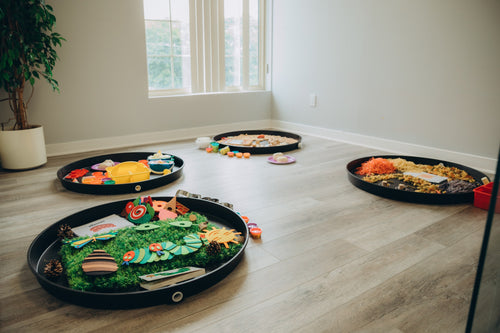
When a parent says “water,” let the baby touch it, hear it flow, taste it, and see it sparkle — that’s a multi-sensory learning experience. The brain lights up. Connections form.
Now imagine pairing that experience with a simple visual card that says “Water,” shown with warmth and enthusiasm. No pressure. No expectations. Just exposure.
This is how learning works in the early years:
-
No worksheets
-
No drilling
-
No forced outcomes
Just meaningful, repeated experiences delivered with love. This approach is why environments designed around whole-brain learning — like those we use at Smartizen — focus on experience first and outcomes later. When learning feels safe and enjoyable, the brain stays open. Read more on our approach here.

Yes, Babies Can Learn Reading and Math — When It’s Done the Right Way
When we talk about math and literacy development for children, many parents imagine sitting at a desk. But babies learn differently.
Visual skills start developing as early as two weeks old. First, babies see high-contrast images. Over time, their ability to recognise patterns and symbols improves — the same skill used to recognise faces.
Letters and numbers aren’t boring to babies. The way they’re introduced can be.
Large, clear visuals shown with enthusiasm activate curiosity. Babies don’t analyse letters — they absorb them. Just like language, reading and math begin as recognition long before production.
When children grow up seeing symbols, patterns, quantities, and words naturally, reading and math feel familiar later — not intimidating.
Children Are Capable of Far More Than We Expect
We’re often amazed when a five-year-old reads chapter books or when a seven-year-old speaks multiple languages. But if we understand child brain development, this becomes less surprising.
Language is foreign to every baby at birth. English is foreign language to a baby born in the US. Spanish is foreign language to a baby born in Spain. The fact that they pick up from daily conversations and interact with everyone makes them capable of speaking that language that people around them speak to. Babies learn the languages they hear because they’re immersed in them.
Meet Bella, 4 year-old girl who speak seven languages simply because they were exposed consistently and meaningfully. The brain doesn’t label something as “too hard” — it just absorbs what’s around it.
The same applies to music, swimming, movement, and memory skills. When given the right environment, children rise to it naturally.
Conclusion
By the age of six, most of your child’s brain development has already taken place. That doesn’t mean the opportunity is gone — but it does mean these early years matter more than we were ever told.
Early learning isn’t about pushing children or racing ahead. It’s about respecting who they are right now and giving them experiences that nurture their curiosity, confidence, and love of learning.
So ask yourself:
-
What new experiences is my child having each day?
-
Are they hearing language, music, and stories?
-
Are they moving, exploring, and feeling emotionally safe?
Most of us raise our children by accident, not intentional enough. You don’t need to be perfect. You just need to be intentional.
Don’t let these powerful years pass by accidentally. With the right support, you can build a strong foundation that makes everything later — school, learning, and life — feel easier and more joyful.
Book a Program Tour/Trial Class with our expert team to see how we can help your child.