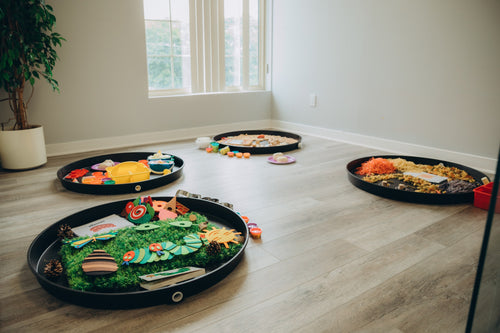

12 Cognitive Games That Boost Brain Development in Children (Kids ages 2–6)
If you’re a parent of a young child, here’s something reassuring:
You don’t need expensive toys or complicated lessons to strengthen your child’s brain.
The truth is, brain development in children happens fastest during everyday play — especially when the activities spark curiosity, memory, focus, and problem-solving.
Below are 12 powerful cognitive games, used by early-childhood specialists, that help nurture smarter, more confident, more focused young learners.
Each activity includes recommended ages and how it supports your child’s growing brain.

1. “What went missing?”
Age: 3–6 years
This is one of the simplest but most effective visual-memory builders.
Place 5–7 objects on a tray, let your child observe for 10 seconds, then hide or remove one item. Ask you child: “What went missing?”
What it develops:
- Visual memory
- Attention to detail
- Focus and concentration
Why it matters:
Strong visual memory helps children recognize letters, remember story sequences, and learn new information quickly. Build photographic memory, observation and attention to details from infant/toddler age.

2. “Pattern Pilot”
Age: 2.5–6 years
Make a pattern using claps, blocks, or beads — for example, clap–stomp–clap — and let your child copy it.
What it develops:
- Working memory
- Sequencing
- Auditory processing
- Rhythm & coordination
Patterns teach children how to follow instructions and improve attention span — both essential for school readiness.

3. “Mystery Bag”
Age: 2–6 years
Put everyday items in a bag and let your child guess what they are by touch alone.
What it develops:
- Sensory processing
- Descriptive language
- Categorization skills
Kids learn faster when multiple senses are involved — this game strengthens cognitive processing through touch. Boost sensory processing and descriptive language.

4. “Imagination Island”
Age: 3–6 years
Start a story with one sentence. Let your child add the next line, and continue back and forth.
What it develops:
- Imagination
- Sequencing
- Communication skills
- Executive function
This strengthens brain pathways for language and creativity, sequencing, flexible thinking — skills linked to later reading success.

5. “Brain Blink”
Age: 2.5–6 years
Call out categories like “something round,” “something soft,” or “something in winter.”
Your child must find or name an object that fits.
What it develops:
- Processing speed
- Categorization
- Attention shifting
Quick games like this make kids more alert and flexible thinkers. It improves brain speed , categorization and attention.

6. “Puzzle Race”
Age: 3–6 years
Solve a simple puzzle together and let your child lead:
Ask, “Where do you think this goes?”
What it develops:
- Spatial reasoning
- Focus
- Problem-solving
- Fine motor skills
Working on puzzles together builds confidence and independent thinking, spatial mapping and persistence.

7. “Logic Lab”
Age: 4–6 years
Give simple instructions (“touch your nose, then clap”) and ask your child to do them backwards.
What it develops:
- Working memory
- Cognitive flexibility
- Self-regulation
This is an advanced brain exercise that builds the foundation for working memory, self-control and cognitive flexibility.

8. “Odd One Out”
Age: 2.5–6 years
Show 3 items. Two are similar; one is different.
Ask your child:
“Which one doesn’t belong — and why?”
What it develops:
- Logic
- Categorization
- Early math skills
Perfect for preparing young minds for grouping, sorting, and classification activities in school.

9. “Sound Detective”
Age: 2.5–6 years
Tap out a rhythm on the table. Your child repeats it.
Then create two patterns (A and B) and ask which one you tapped.
What it develops:
- Listening skills
- Auditory discrimination
-
Musical intelligence
These skills support phonics, music intelligence, attention and reading readiness.

10. “Captain Recall”
Age: 3–6 years
Create a simple obstacle setup and add missions:
“Go under the table, jump twice, then put the toy in the basket.”
What it develops:
- Planning
- Sequencing
- Gross motor coordination
-
Executive function
This game blends movement with thinking, boostz planning, sequencing and gross-motor brain integration, a powerful combination for brain growth.
Bonus: Advanced Brain-Boosting Games Used in Smartizen Classes
11. Photographic Memory Grid
Age: 2–6 years
A grid of images appears for a few seconds; children recall the locations. Starting with 3-4-6-8-12-20 grid.
What it develops:
- Visual recall
- Attention
-
Photographic memory
This is one of Smartizen’s signature memory-strengthening activities.
12. Flash Speed Cards
Age: 0–6 years
Cards are shown quickly to help kids absorb visual information at high speed.
What it develops:
- Fast processing
- Visual recognition
- Right-brain activation
These games help children think faster, focus longer, and learn more efficiently.
Final Thoughts for Parents
You don’t have to be a teacher to support brain development in children — you just need playful, simple, research-backed activities.
Small daily exercises create big results over time: stronger memory, better focus, improved confidence, and a love of learning.
And if you ever want guided lessons, Smartizen offers everything from memory training to sensory play — all designed for the first six years when the brain grows fastest.